If you’ve ever watched a manufacturing line run at full speed, with robotic arms twisting components with microscale precision, or stood in front of a motor that drives a conveyor system without a hint of vibration or power waste, you’ve likely encountered flat wire winding at work. For years, I’ve supplied flat wire winding solutions to industrial facilities around the world, and what I see again and again is that this technology isn’t just a minor upgrade to traditional round wire winding—it’s a quiet revolution that’s turning inefficient, fragile, or overly bulky automation systems into leaner, more reliable powerhouses. When I first started in this industry, many clients wrote off flat wire as a niche fix for small parts. Today, it’s a non-negotiable component for anyone building industrial automation that needs to perform consistently, reduce downtime, and keep energy costs in check. Let’s break down exactly what role it plays, beyond the buzzwords, and why it matters more than ever as automation grows more sophisticated. Flat Wire Winding
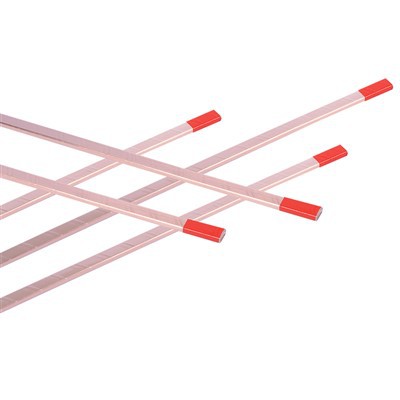
First, let’s ground this in the basics of what flat wire winding actually is, because explaining this to engineers and plant managers is where a lot of misconceptions start. Traditional round wire works by wrapping a cylindrical wire around a core, but flat wire is, well, flat—its cross-section is a thin rectangle, not a circle. When you wind it, you lay each layer of wire side-by-side with almost no gap between turns, rather than the small space that round wire leaves between each loop. That simple difference changes almost everything. For industrial automation, where every millimetre of space, every watt of power, and every minute of unplanned downtime costs money, that isn’t trivial. Let’s start with the biggest role: space efficiency. Think about a servo motor, the workhorse of most industrial automation—these are the motors that move robot joints, adjust conveyor belts, and control the position of packaging lines. A round-wire servo motor needs a certain size core and number of turns to produce the torque required, but the gaps between the round wires mean you’re wasting space inside the motor housing. With flat wire winding, those gaps are gone. A motor wound with flat wire can deliver the exact same torque as a round-wire model, but it’s up to 30% smaller, and that matters for automation systems that are getting more compact. If you’re building a collaborative robot that needs to fit on a factory floor without taking up half the aisle, or a linear actuator that slides into a tight gap in a medical device assembly line, flat wire winding is what makes that possible. I recently worked with a client that was trying to retrofit an old packaging line with new servo motors, but there was only 10% more space in the motor housing than the old design allowed. Switching to flat wire winding meant we could deliver the same torque in a smaller package, and they didn’t have to rework an entire 20-metre line to fit new infrastructure. That’s the kind of impact that gets attention.
Next, energy efficiency. For industrial facilities, especially those with dozens or hundreds of motors running 24/7, energy bills are a huge cost. Round wire, with its cylindrical shape, has higher AC resistance at high frequencies because of the skin effect—current tends to flow near the surface of the wire, so the round shape means the total cross-section available to carry current is less than the actual diameter of the wire. Flat wire, by contrast, has a larger surface area relative to its cross-section at the frequency most industrial servo motors run at, so less energy is lost as heat. That heat isn’t just a waste of power, either. Motors generate heat, and that heat wears down insulation, shortens the lifespan of bearings, and forces engineers to oversize cooling systems. A motor wound with flat wire runs cooler, so it lasts longer, requires less maintenance, and uses less energy. We ran a test a few years ago with a mid-sized factory that had 22 servo motors on their automotive parts assembly line. Switching each motor from round to flat wire winding cut their total power use by 12%—that’s over $18,000 a year in energy costs for that line, and it didn’t require any changes to the line’s operation, just a component swap. For a facility running 10 lines, that adds up fast. That’s a role that translates directly to the bottom line, not just technical specs.
Reliability is another core role of flat wire winding in industrial automation, and it’s something we hear about constantly from clients who’ve dealt with unplanned downtime. Industrial automation systems don’t get to shut down for a day to fix a broken part—every hour a line is down costs thousands, and for automotive or electronics manufacturing, that number is even higher. Round wire windings are more prone to “movement” inside the motor housing, especially when the motor is cycling on and off, or subject to vibration from heavy loads. That movement can cause insulation to wear, leading to short circuits, or the wires can shift and create imbalances that throw off the motor’s performance. Flat wire, because it lays side-by-side with almost no gap, is much more rigid. When wound correctly, it holds its shape tightly, so there’s almost no movement during operation. We had a client in the aerospace parts sector that was running a robotic milling system, where the motors had to withstand constant high-frequency vibration from cutting titanium. Their round-wire motors were failing every three months, leading to line shutdowns that cost over $50,000 each time. Switching to flat wire winding cut motor failures to once every 18 months, and the line’s uptime jumped from 92% to 98.7%—that’s a massive difference for a high-demand sector. That reliability isn’t just a nice-to-have; it’s table stakes for industrial automation now, as supply chains demand higher consistency and less downtime.
Wait, but flat wire isn’t just for motors, right? A lot of people only associate it with rotary motors, but it plays a key role in other automation components too. Let’s talk about inductive sensors and transformers, which are used everywhere from conveyor line detection to control circuits. Traditional round-wire coils in these components have uneven inductance because of the gaps between wires—some turns are closer to the core, some are farther, so the electrical signal isn’t as consistent. Flat wire coils have uniform spacing and shape, so their inductance is far more predictable. That means sensors can detect small parts more accurately, even in high-speed lines where parts are moving at 100 metres per minute. For electronics assembly, where components are measured in millimetres, that accuracy is critical—if a sensor misses a part, you get a defect, and reworking small electronics is expensive. We supplied flat wire winding for a client that makes smartphone camera modules, and their inspection lines now have a defect rate 20% lower than when they used round wire sensors, because the flat wire coils catch tiny, thin parts that round wire sensors would miss. It’s a small detail, but in automation, details are what separate a line that runs profitably and one that’s always fixing mistakes.
There’s also a growing role for flat wire winding in the shift towards more compact, lightweight automation, especially for mobile or collaborative robots. Collaborative robots, or cobots, are designed to work side-by-side with human workers, so they need to be safe, lightweight, and precise. A traditional round-wire motor for a cobot’s arm is heavier and bulkier, so the robot has to be designed around that size and weight limit. Flat wire motors, because of their smaller size and higher torque density, let cobot manufacturers build lighter arms that can move faster with less energy. A few years ago, a startup we worked with that makes cobots for small parts assembly was struggling to get their robot to meet the International Organization for Standardization (ISO) safety standards, which limit the force a robot can apply if it touches a worker. Switching to flat wire winding cut the motor weight by 28%, and let them adjust the torque profile to meet the safety standards without losing performance. Now that cobot is used in hundreds of small factories that can’t afford large, traditional industrial robots. That’s a trend that’s only going to grow as automation moves beyond large, dedicated lines to more flexible, on-demand production.
But flat wire winding isn’t a one-size-fits-all solution, and that’s an important point to make. It’s not a replacement for round wire in every application—for example, very small motors or coils for low-power applications still use round wire because it’s more flexible and easier to work with. The biggest limitation right now is manufacturing: winding flat wire isn’t as simple as winding round wire. The wire is stiffer, more prone to damage if bent incorrectly, and requires specialized machinery to get uniform layers without gaps or damage to insulation. That’s why choosing a supplier that has experience with flat wire winding, not just a general wire component manufacturer, is critical. I’ve seen companies buy cheap flat wire coils that had uneven winding, leading to motor failures in six months, because they didn’t account for the precision required. A good flat wire winding process requires tight control over wire tension, layer alignment, and insulation quality—all things that come with decades of experience, not just a machine.
Looking ahead, the role of flat wire winding in industrial automation is only going to expand as automation gets smarter. The rise of Industry 4.0, with its smart sensors, predictive maintenance, and high-speed production lines, depends on components that are consistent, reliable, and energy-efficient. Flat wire winding fits right into that: because motors with flat wire can be monitored for temperature and performance more easily, manufacturers can implement predictive maintenance, catching issues before they cause downtime. We’re already working with a large automotive OEM that’s integrating flat wire motors into their new assembly lines, and they’re using data from the motors to schedule maintenance weeks in advance, rather than fixing problems after they fail. That’s the future of automation, and flat wire is a key building block.
For anyone building or upgrading industrial automation systems, the role of flat wire winding isn’t just about specs—it’s about solving real problems: reducing downtime, cutting energy costs, fitting systems into tighter spaces, and improving reliability. I’ve spent 15 years in this industry, and the biggest shift I’ve seen is that flat wire isn’t just for specialists anymore. It’s a standard component that makes automation work better, no matter what industry you’re in.

If you’re looking to upgrade your automation components, solve reliability issues, or optimize energy use in your facility, I’d be happy to discuss how our flat wire winding solutions can work for you. There’s no one-size-fits-all, and we take the time to understand your specific needs, whether you’re building a new line or retrofitting an existing one. Reach out to connect for a consultation.
Continuously Transposed Conductors References
- International Electrotechnical Commission. (2021). Technical Report on Wire Winding for Rotating Electrical Machinery.
- Industrial Automation and Process Control Association. (2022). Energy Efficiency in Servo Motor Systems for Manufacturing.
- Robotics Industry Association. (2023). Collaborative Robot Component Design and Performance Standards.
- Journal of Electrical and Electronic Engineering. (2020). Flat Wire Windings: Advantages in High-Frequency and High-Torque Motor Applications.
Tianjin Jingwei Power Technology Co., Ltd.
As one of the most professional flat wire winding manufacturers and suppliers in China, we’re featured by quality products and good service. Please rest assured to buy durable flat wire winding made in China here from our factory. Contact us for more details.
Address: No.1 Chuangxin Rd. Xiaozhan Industrial Park, Jinnan District, Tianjin, China
E-mail: info@jwdc.cn
WebSite: https://www.jw-dcs.com/
