Hey there, if you’re deep in the power transformer game (or just curious about why that “little temp box” doesn’t get the love it deserves)—let’s break down the temperature controller’s job plain and simple. As a power transformer supplier, I see so many folks skip over this component until something goes wrong, and that’s where we step in to school ’em. First off, let’s ground this: transformers don’t just sit there humming along carrying power; they generate heat. Coils copper coils wrapped around iron cores, right? When electricity flows, resistance makes heat—no way around it. If that heat builds up too much, bad things happen. Winding insulation breaks down, oil (for oil-filled units) degrades way faster, parts warp, and suddenly your transformer’s out, costing you downtime and cash. That’s exactly where the temperature controller earns its spot—let’s dive into its actual functions, no fancy jargon. Power Transformer
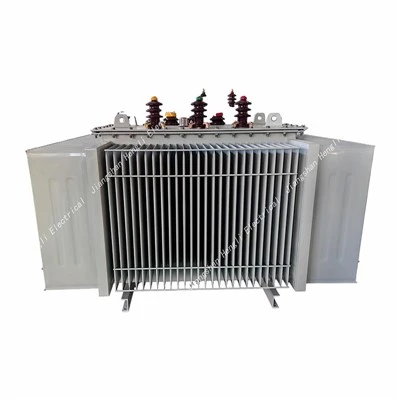
First, the core gig: real-time temp monitoring and precision alerts. A lot of people think a temp controller’s just a gauge that reads “hot” or “cold,” but nope—we’re talking minute-by-minute data. For oil-filled transformers (the most common industrial ones), it tracks two key temps: top oil temp and winding hot-spot temp. Why both? Top oil’s easy to measure, but the winding’s the actual hottest part—where insulation wears out fastest. A good controller doesn’t just show numbers; it compares those readings to your transformer’s rated limits. Like, if your 10MVA transformer is rated for a maximum winding temp of 110°C, the controller will trigger a warning (usually a blinking light or an email alert) when it hits 95°C, and a shutoff if it crosses 110. This isn’t overkill—we’ve seen transformers run 10°C over rated temp for just a few weeks, and insulation lifespan drops by half. That’s a math problem no one wants to solve.
Next, load management support. Transformers are supposed to handle a certain load, but sometimes demand spikes—like when a factory cranks up production during a busy month, or a neighborhood AC system blows up in summer (we’ve all been there). The temp controller doesn’t just monitor heat; it feeds that data into your grid’s load management system. Let’s say the controller sees winding temp climbing because the load’s too high—it can trigger a “load tap changer” adjustment (or send a signal to your ops team) to trim the load just enough to bring temp back down. For us as a supplier, we design these controllers to sync with both local and remote monitoring, so our clients don’t have to camp out by the transformer. We’ve had clients use this function to avoid $20k+ transformer replacements by just shifting load instead of letting things overheat.
Then, cooling system optimization. Most medium to large transformers use fans or pumps to circulate oil or air and cool things down. The temp controller is the brains behind when those kick in. If your top oil temp hits 55°C, the fans turn on; if it drops back to 45°C, they shut off. That’s not just convenient—it saves energy. Running fans 24/7 when you don’t need them wastes power, which adds up over a year. One of our clients with a 50MVA substation cut their cooling energy use by 18% just by upgrading their old, one-size-fits-all temp controllers to our smart, adaptive models. Plus, it extends the life of the cooling components—no more wear from running nonstop when it’s 20°C outside.
Wait, let’s not sleep on fault detection and diagnostics. A temp controller isn’t just a passive reader—it can catch issues before they turn into full-blown failures. For example, if the top oil temp spikes 10°C out of nowhere with no change in load, that might mean a clogged cooling line, a leak in the oil, or even a failing winding. The controller logs that anomaly, so your maintenance team can check it out before the transformer trips offline. We supply controllers that store 6 months of temp data, which is a lifesaver for root cause analysis when something does go wrong. Last year, a client contacted us because their transformer was tripping randomly; we had them pull the temp controller logs, and we saw a consistent 8°C hot spot on one winding—turns out a loose connection was causing extra resistance and heat. They fixed it for $500 instead of a $15k replacement.
Now, let’s talk about why this matters for you—as someone who’s buying a power transformer, not just a random part. I’ve talked to so many clients who pick a transformer based just on MVA rating and price, then skimp on the temp controller. Here’s the thing: a $500 good temp controller can save you thousands in downtime, repairs, and replacements. We see it all the time: clients who get a budget transformer with a basic analog temp gauge (no alerts, no hot-spot tracking) end up with a failed unit 2 years early, because they didn’t notice the winding was overheating until it was too late. Our standard offerings include digital temp controllers with hot-spot calculation, remote monitoring, and customizable alerts—no extra “nickel and diming” for the features that actually matter.
Also, for outdoor transformers (super common for substations), temp controllers have to handle extreme weather. Last winter, one of our clients in a cold climate noticed their transformer wasn’t warming up properly in sub-zero temps—turns out their old controller didn’t trigger the space heater when needed. Our controllers have a built-in low-temp setpoint that kicks on the heater at -10°C, preventing oil from getting too thick and damaging the windings. That’s a function no one thinks about until their transformer dies in a snowstorm.
Let’s bust a myth here: some folks think “my transformer has a built-in cooling system, so I don’t need a temp controller.” Nope—those cooling systems need a trigger, and the controller is that trigger. It’s the feedback loop that tells the transformer, “hey, we’re overheating—cool down, stat.” Without it, cooling runs when it shouldn’t, doesn’t run when it needs to, or fails to catch gradual overheating that ruins insulation.
Now, what about maintenance for the temp controller itself? Simple—just a yearly check to make sure the probes (the sensors that measure temp) are clean and calibrated. Dirt or oil on the probe can give a false reading, so wiping it down and verifying with a handheld temp gauge takes 10 minutes. We include free calibration checks with every transformer we sell, and our team is always on hand if someone needs to troubleshoot their controller.
At the end of the day, the temperature controller’s job is threefold: protect the transformer from overheating damage, optimize performance and energy use, and give you early warning of issues that can save you a ton of money. It’s not the flashiest part of a power transformer, but it’s one of the most critical.
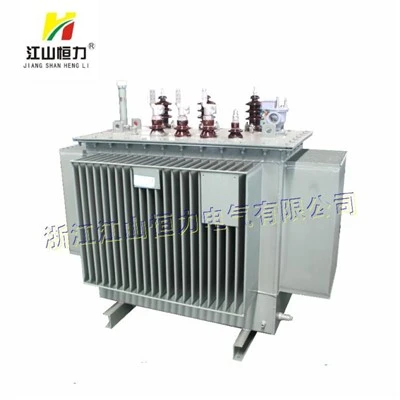
If you’re in the market for a power transformer and want to make sure you’re getting one with a controller that actually does the job (not just a cheap gauge that looks good on a spec sheet), or if you need to upgrade your existing transformer’s controller to avoid downtime, reach out to us. We’ll walk you through the right options for your specific setup, no pressure, just straight talk.
Single Phase Pole Mounted Transformer References
- IEEE Std C57.12.90-2015, IEEE Standard Test Code for Liquid-Immersed Distribution, Power, and Regulating Transformers
- NEMA Standards Publication TR-1, Temperature Rise for Dry-Type and Liquid-Immersed Transformers
- Power Transformers: Principles and Applications, A. J. Schwab, CRC Press, 2018
Zhejiang Jiangshan Hengli Electrical Co., Ltd.
Zhejiang Jiangshan Hengli Electrical Co., Ltd. is one of the most professional power transformer manufacturers and suppliers in China, featured by quality products and low price. Please rest assured to wholesale cheap power transformer in stock here and get pricelist from our factory. Customized orders are welcome.
Address: 212 Fuzhu Street Sidu Town, Jiangshan, Zhejiang, China
E-mail: henglijs@foxmail.com
WebSite: https://www.henlypower.com/
