As a gate valve supplier that’s all about “Gate Valve By Standard,” I get it—when you’re sourcing valves for industrial projects, compliance isn’t just a checkbox. It’s the thing that keeps pipelines flowing, refineries running, and power plants safe. Last month, I had a customer call me panicking because a batch of non-compliant gate valves they’d bought failed a hydrostatic test mid-install. That’s why this stuff matters: cutting corners on standards doesn’t just waste money—it creates safety risks, delays projects, and turns what should be a smooth purchase into a nightmare. Gate Valve By Standard
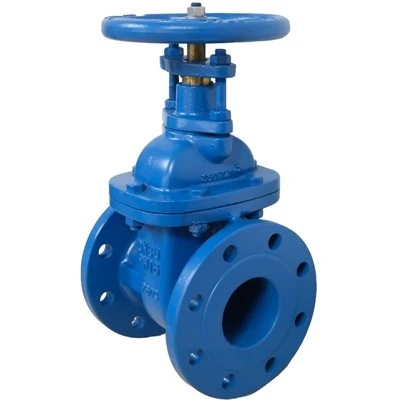
So, how do valve manufacturers actually make sure their gate valves stick to the standards? It’s not a one-and-done audit—it’s a whole process that starts way before a valve gets built, and it doesn’t stop until it’s on the job site. Let me walk you through the real steps, the stuff we actually do every day at our shop, not just the textbook stuff.
First up, we don’t just pick a random valve design and say, “That works.” We start with the right blueprint, and that means locking in the standard the customer needs—whether it’s API 600 for oil and gas, ASME B16.10 for dimensions, or MSS SP-70 for cast steel valves. Wait, API, ASME, MSS—those are the abbreviations you’ll hear thrown around, and they’re the big three for gate valves. Here’s the thing: if your supplier says they meet API 600 but their flange dimensions don’t match ASME B16.10, that’s a red flag. We keep a binder (yes, a physical binder, not just a cloud folder) of all the current standard specs for every valve we make—update that thing every time a standard gets revised, because they change more often than you think. Last year, API 600 got a minor tweak to stem seal requirements, and we had to retool two of our stamping machines to hit the new marks. If we’d skipped that, every valve we turned out would’ve been invalid.
Next, material selection. A gate valve’s body, gate, stem, and seat—if any of those parts aren’t made to the standard, the whole valve is trash. Let’s say you need a gate valve for a corrosive chemical line; the standard will tell you exactly what alloy to use—maybe CF8M stainless steel, or WCB carbon steel for high temp. But here’s the trick: we don’t just buy a bar of “stainless steel” and call it a day. We get a material test report (MTR) from our metal supplier, and we test a sample ourselves to confirm it matches the specs. Last quarter, a supplier sent us a batch of what they claimed was CF8M, but our quick alloy test showed it was 304 stainless—close, but not the same. API 600 requires CF8M for that application, so we sent the batch back. If we’d installed that, the valve would’ve corroded in six months, and that customer would’ve had to rip it out early. We also track every material with a unique lot number—so if a batch does fail a test, we can trace every valve made from it, no excuses.
Then there’s manufacturing process control. Gate valves have moving parts—especially the stem and gate that slide up and down to open or close. If the gate’s not machined flat, or the stem’s diameter is off by even a fraction of a millimeter, the valve won’t seal right. Our shop has quality checks at every step: when we machine the gate, we use a coordinate measuring machine (CMM) to verify flatness. When we weld the valve body, we do a non-destructive test (NDT)—like an ultrasonic test—to make sure there are no hidden cracks. A lot of small suppliers skip NDT on routine jobs, but API 600 requires it for pressure-containing parts, so we don’t cut that corner. We also keep logbooks for every machine—each time a CNC mill gets calibrated, we write it down. Last week, a mill was off by 0.2mm, so we recalibrated it right there instead of letting it make a thousand parts that’d be out of spec. That’s the stuff no one sees, but it’s what makes compliance real.
Testing is where it all gets proven. Standards like API 600 and ASME B16.34 (that’s for pressure testing) don’t just say “test the valve”—they tell you exactly how. We do two main tests: shell testing and seat testing. Shell testing is pressurizing the valve body with water to 1.5 times its rated pressure, and holding it for a minute—no leaks, no sweating. Seat testing is closing the gate and pressurizing one side, checking for leaks on the other. But here’s a thing a lot of suppliers mess up: they test a sample batch instead of every single valve. We test every valve. Wait, I know that’s time-consuming, but if one valve in a batch fails, you don’t know why. It could be a bad part, or a machine error. Testing every valve lets us catch that before it leaves the shop. Last month, one valve failed seat testing—turns out the gate’s seat ring was installed crooked. We fixed it, retested, and sent it out on time. If we’d skipped testing that one, the customer would’ve had a valve that wouldn’t seal, and that delay would’ve cost them thousands. We also do periodic type testing—sending a valve to a third-party lab to run extreme tests, like cycling the gate a thousand times, or exposing it to high temp. That’s how we make sure our design works long-term, not just for the first test.
Documentation is huge. Standards require specific paperwork—MTRs, test reports, calibration logs—but we don’t just file them away. We make sure every order has a complete set, and we’ve even started sending digital copies with each shipment, so customers don’t lose them. Last year, a customer needed to get their project certified by a third party, and they couldn’t find the MTRs for a previous valve order. We had them on file in our cloud storage, and we sent them in five minutes. That’s the kind of reliability that comes with being serious about compliance, not just checking boxes.
Now, let’s talk about common pitfalls that suppliers fall into, because you need to know what to watch for. Some suppliers will say they “meet” a standard, but they only meet parts of it. For example, a gate valve might meet API 600’s body specs but skip the stem seal requirements, which are critical for preventing leaks. Others use “off-spec” materials and just hope no one tests them. And a lot of small shops will skip type testing, so their valves might work sometimes but not every time. At Gate Valve By Standard, we don’t do any of that. We’re not the cheapest supplier out there, but we’ve built our reputation on getting this right—because we’ve seen what happens when you don’t.
One more thing: if you’re a buyer, how do you make sure your supplier is actually compliant? Don’t just take their word for it. Ask for a copy of the standard they’re claiming, and check that their paperwork matches. If they say API 600, pull up the latest API 600 spec and verify the requirements for your valve. Ask to see recent type test reports from a third party. And if you’re working on a big project, consider a pre-purchase audit—we let customers come to our shop and watch us test valves, so they can see for themselves that we’re not cutting corners.

At the end of the day, valve compliance isn’t just about rules—it’s about keeping people safe and projects on track. We take that seriously here. If you’re sourcing gate valves and want to make sure they check every standard, no surprises, reach out to us. We can talk through your project requirements, show you how we ensure every valve meets the specs you need, and help you avoid the headaches that come with non-compliant valves.
Check Valve References:
- American Petroleum Institute. (2022). API 600: Steel Gate Valves for Refinery Services.
- American Society of Mechanical Engineers. (2021). ASME B16.10: Face-to-Face and End-to-End Dimensions of Valves.
- Manufacturers Standardization Society. (2019). MSS SP-70: Cast Steel Valves – Testing Requirements.
Yantai Valtone Valve Co., Ltd.
As one of the most professional gate valve manufacturers and suppliers in China, we have world-leading production equipment and strong manufacturing capabilities. Please rest assured to buy bulk durable gate valve for sale here from our factory. We also accept customized orders.
Address: No. 13, Wuhan street, Bajiao industry park, Yantai ETDZ, Shandong, China.
E-mail: liujun@valtone-valve.com
WebSite: https://www.valtonevalve.com/
