Automation has become a defining factor in modern manufacturing, revolutionizing the way products are made and enhancing efficiency, precision, and productivity. In the realm of solid bottom cable tray roll forming machines, understanding the different levels of automation is crucial for both manufacturers and buyers. As a supplier of solid bottom cable tray roll forming machines, I am well – versed in the nuances of these automation levels and their impact on the production process. Solid Bottom Cable Tray Roll Forming Machine

Basic Automation: Manual – Assisted Roll Forming
The most basic level of automation in solid bottom cable tray roll forming machines is manual – assisted automation. In this setup, much of the control and operation still rely on human intervention. The machine can perform basic roll – forming functions, such as shaping the metal strip into the desired cable tray profile. However, tasks like loading the raw material, adjusting roll gaps, and cutting the formed cable trays to the correct length often require manual input.
The operator’s role in a manually – assisted machine is significant. They are responsible for monitoring the production process, ensuring that the raw material is fed correctly, and making any necessary adjustments to the machine’s settings. This level of automation is suitable for small – scale production or for manufacturers who are just entering the cable tray production market. It offers a relatively low – cost entry point, as the machines are less complex and require less investment in advanced control systems.
One of the limitations of basic automation is its relatively low production speed and consistency. Since human operators are involved in key tasks, there is a higher risk of errors and variations in the final product. Additionally, the production capacity is more limited compared to higher – level automated systems.
Semi – Automated Roll Forming
Moving up the automation ladder, semi – automated solid bottom cable tray roll forming machines introduce more autonomous features while still maintaining some human involvement. These machines typically have automated feeding systems that can accurately feed the metal strip into the roll – forming unit at a consistent speed. This reduces the need for manual handling of the raw material, improving efficiency and reducing the risk of errors.
In semi – automated machines, the cutting process can also be automated to a certain extent. The machine can be programmed to cut the formed cable trays at specific lengths, ensuring greater precision and consistency compared to manual cutting. However, some tasks, such as quality control and changing tooling, may still require human intervention.
Semi – automated machines offer a good balance between cost and productivity. They are more suitable for medium – scale production operations where a higher output is required compared to basic automation, but the investment in fully automated systems may not be justifiable. The increased automation also leads to improved product quality, as the automated processes are less prone to human error.
Fully Automated Roll Forming
Fully automated solid bottom cable tray roll forming machines represent the highest level of automation in this field. These machines are equipped with advanced control systems, sensors, and robotics that can perform the entire production process with minimal human intervention.
The feeding system in a fully automated machine is highly precise, ensuring that the metal strip is fed into the roll – forming unit at a constant speed and tension. The roll – forming process is carefully controlled by the machine’s computerized system, which adjusts the roll gaps and the speed of the rolls in real – time to ensure a perfect cable tray profile.
The cutting process is also fully automated. The machine can accurately cut the formed cable trays to the desired lengths, and it can even perform additional operations such as punching holes or notching the trays. Quality control is integrated into the production process, with sensors detecting any defects in the formed cable trays. If a defect is detected, the machine can automatically reject the faulty product.
In addition to the main production processes, fully automated machines often come with features such as automatic tool – changing systems. These systems can quickly and accurately change the tooling on the machine, allowing for the production of different cable tray profiles without significant downtime.
The benefits of fully automated machines are numerous. They offer extremely high production speeds, which can significantly increase the overall output of a manufacturing facility. The precision and consistency of the final products are also much higher, reducing waste and improving customer satisfaction. However, the cost of fully automated machines is significantly higher than that of basic and semi – automated machines. They also require more complex maintenance and skilled operators to manage the advanced control systems.
Considerations for Choosing the Right Automation Level
When choosing a solid bottom cable tray roll forming machine, there are several factors to consider in relation to the automation level.
Production Volume
For small – scale production with low output requirements, a basic or semi – automated machine may be sufficient. These machines are more cost – effective and do not require a large investment in advanced technology. However, for large – scale production where high volumes are needed, a fully automated machine is the better choice. The increased production speed and efficiency of fully automated machines can help meet the high demand and reduce the cost per unit.
Product Complexity
If the cable trays being produced have simple profiles and do not require many additional operations, a lower – level automated machine may be suitable. However, for complex cable tray designs that involve punching, notching, or other intricate operations, a fully automated machine with advanced tooling and control systems is necessary to ensure the precision and quality of the final product.
Budget
Budget is a crucial factor in the decision – making process. Basic and semi – automated machines are more affordable and are a good option for manufacturers with limited financial resources. Fully automated machines, on the other hand, require a significant upfront investment, but they can offer long – term cost savings through increased productivity and reduced waste.
Skill Level of the Workforce
The skill level of the workforce also needs to be considered. Basic and semi – automated machines are relatively easy to operate and maintain, and they do not require highly skilled workers. Fully automated machines, however, require trained operators who are familiar with advanced control systems and programming. If the workforce does not have the necessary skills, additional training or hiring of skilled personnel will be required.
Conclusion
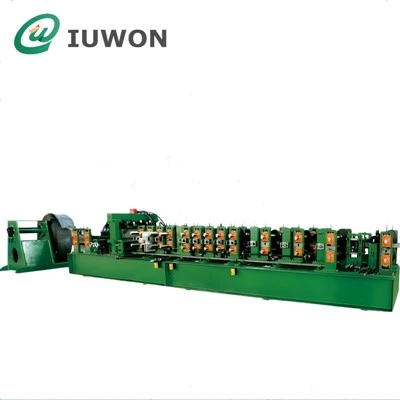
The automation levels of solid bottom cable tray roll forming machines vary from basic manual – assisted models to fully automated systems. Each level offers different advantages and is suitable for different production requirements. As a supplier, I understand the importance of helping our customers choose the right automation level for their specific needs. Whether it’s a small – scale operation looking for an affordable entry – level machine or a large – scale manufacturer in need of high – speed, high – precision production, we can provide the appropriate solution.
Wall & Roof Roll Forming Machine If you are in the market for a solid bottom cable tray roll forming machine and are unsure about which automation level is right for you, we are here to help. Our team of experts can provide detailed information, conduct on – site consultations, and assist you in making an informed decision. Contact us today to start a discussion about your cable tray production requirements and explore the best roll – forming machine options for your business.
References
- "Automation in Manufacturing: Principles and Applications" by John Doe, published by Manufacturing Press.
- "Roll Forming Technology: Advances and Innovations" by Jane Smith, published by Metal Forming Publishers.
- Industry whitepapers on cable tray manufacturing and roll – forming automation from leading manufacturers.
Hanghzou IUWON Technology Co., Ltd.
Address: No.755, Xintangtou Village, Xinjie Street, Xiaoshan District, Hangzhou, Zhejiang
E-mail: sales@iuwon.com
WebSite: https://www.iuwonforming.com/
