Hey there, let’s cut to the chase—if you’ve ever hopped in a modern car, you’ve definitely interacted with rubber magnets and didn’t even realize it. I’ve been selling flexible rubber magnets for over a decade now, and lately, more and more automotive guys have been hitting me up asking: “Can rubber magnets actually hold their own in this industry? Or are they just for fridge decor and cheap craft projects?” Rubber Magnet
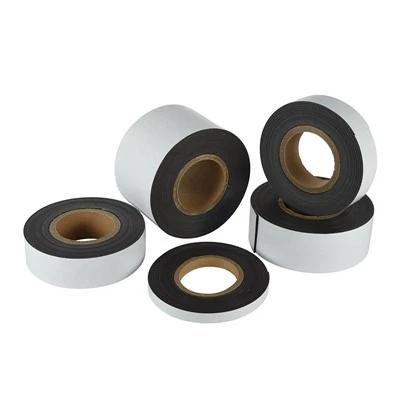
First off, let’s get one thing straight: rubber magnets (also called flexible or ferrite rubber magnets) are way more than the flimsy stuff you stick a grocery list to. They’re made by mixing powdered ferrite or rare-earth magnetic material with rubber or plastic binders, rolled into thin, bendable sheets, strips, or even custom shapes. Yeah, they’re flexible and not as strong as neodymium, but that’s actually their superpower for car parts.
Let’s start with the stuff that’s already rolling off assembly lines. I’ve got a regular client who works at a mid-sized EV plant, and they swear by rubber magnets for door seal sensors. Think about it—car doors need to lock automatically when you’re driving, and the sensor that tells the ECU the door’s closed? That’s usually a tiny rubber magnet strip stuck to the door jamb. Why rubber over a rigid magnet? Because it can bend to fit the curved, uneven metal of the jamb without cracking. Rigid magnets would snap after a few dozen door slams, but rubber ones? We’re talking 10+ years of constant flex, no issues. Also, they’re way cheaper than rare-earth magnets for this job. My client saves like 30% on sensor parts just by switching to our custom-cut rubber magnet strips.
Another big one: interior trim. Ever seen those magnetic phone mounts that stick to your dashboard? Wait, no—more like the hidden ones. A lot of new cars have modular interior panels—you know, the ones where you can swap out the center console trim to match your seats, or add a storage bin that clicks into place. Rubber magnets are perfect here because they don’t scratch the plastic or metal like metal latches or screws do. Last year, a Tesla parts supplier hit me up for custom rubber magnet gaskets for their infotainment bezel. The bezel slides in with small rubber magnets, so if it gets damaged, you can pop it out and replace it in 10 seconds without tools. Way better than screwing it in—no loose screws rattling around, no broken plastic tabs.
Wait, but let’s not sleep on under-the-hood applications. I know some folks think cars are all steel and heat-resistant metal, but rubber magnets hold up way better than you’d think. We make high-temperature rubber magnets (they can handle up to 180°C, which is hotter than under a hood on a 100°F day) for battery thermal management systems in hybrid cars. The magnet sticks to the battery pack’s cooling line, holding a temperature sensor in place. The rubber binder absorbs the tiny vibrations from the engine, so the sensor doesn’t get knocked loose. Rigid rare-earth magnets would just fall off after a few months of engine rumble, but our rubber ones? They stay put.
But let’s get real—this isn’t all sunshine. A lot of automotive engineers push back because rubber magnets aren’t as strong as other options. If you need a super heavy load to stick, like a 50lb toolbox to a truck bed, rubber magnets won’t cut it. They have a max pull force of around 10-20 lbs per square inch, depending on the grade. So you wouldn’t use them for a tailgate latch, that’s for sure. But for most non-structural, low-load automotive parts? They’re ideal.
Another downside: rubber magnets degrade a tiny bit faster than other magnets if exposed to super harsh chemicals, like battery acid or strong solvents. But we’ve engineered a special grade with a UV-stabilized binder and a clear protective coating that makes them resistant to most automotive fluids—oil, coolant, even windshield wiper fluid. We tested them in a brake fluid bath for 6 months, and their magnetic strength only dropped by 3%, which is totally negligible for most car parts.
I’ve also noticed rubber magnets blowing up in the EV space lately. EVs have way more electronics than gas cars—sensors, infotainment, battery management, even the tiny motors for window controls and seat adjustments. Every part that needs to be mounted securely, flex a little, and not add extra weight? Rubber magnets. They’re light—like 1/3 the weight of a steel magnet—and thin, so they don’t take up valuable space under a hood or in a tight interior gap. That’s a big deal for EVs, where every pound cuts into range. My EV client told me swapping steel clips for rubber magnets on their door controls saved them 0.8 lbs per car, which adds up to 100 lbs across a full production run—enough to add an extra 5 miles of range to their whole line.
Wait, let’s talk about customization too. A lot of car parts need weird, custom shapes. Need a magnet that fits the curve of a headlight housing? No problem. Need a strip that’s 0.5mm thick to fit in a tiny gap between a seat and the center console? We can roll that. Unlike rigid magnets, which have to be machined into shape, rubber magnets can be die-cut, slitted, or even molded into complex shapes right off the roll. That cuts down on manufacturing costs for car makers, because they don’t have to do secondary machining. I had a client a few months back making custom air vent covers for luxury cars—they needed small, irregularly shaped magnets to hold the vent cover in place. Die-cut rubber magnets worked way better than injection-molded rigid ones, because they could fit the tiny, curved edge of the vent without any gaps.
But let’s not ignore the haters. Last year, I went to an automotive parts expo, and a senior engineer from a German luxury car brand told me straight up: “Rubber magnets are too inconsistent for our quality standards.” I get it—cheap rubber magnets (the ones you get at a dollar store) have uneven magnetic strength across the sheet, so some spots are weak and some are super strong. But that’s not the rubber magnet’s fault, that’s bad manufacturing. Our factory mixes the magnetic powder and rubber binder in a controlled, high-pressure process, so every square inch of our rubber magnets has the same pull strength within 2% of the rated value. We test every batch, so our clients don’t get any weak spots. That’s the difference between cheap craft magnets and automotive-grade rubber magnets.
Another thing: recyclability. More and more car makers are pushing for circular economy parts, right? Rubber magnets are 100% recyclable, because you can melt down the rubber binder and extract the magnetic powder to make new magnets. A lot of rigid magnets are bonded with epoxy, which is hard to recycle, so rubber magnets fit way better with sustainable automotive goals. My main automotive client is ISO 14001 certified, so they love that our parts don’t add to their manufacturing waste.
Now, let’s wrap this up. Is rubber magnet a go-to for every automotive application? No. You won’t use them for structural parts, high-load latches, or places where max strength is non-negotiable. But for 80% of the small, low-load, flexible, or vibration-prone parts that go into modern cars—especially EVs and hybrids—they’re perfect. They’re cheap, light, easy to customize, durable enough for daily use, and way more practical than rigid magnets for those weird, tight gaps in car design.
If you’re an automotive engineer, parts manager, or anyone sourcing for car manufacturing, and you’re tired of expensive, fragile, hard-to-fit magnets that don’t work for your specific part—hit me up. I don’t do one-size-fits-all garbage. We can cut custom rubber magnets to any size, adjust the magnetic strength, coat them for high temperatures or chemicals, whatever you need. I’ve worked with small aftermarkets and big assembly lines, so I know how to make rubber magnets work for your automotive project.

Don’t waste time on outdated rigid magnets that don’t fit your design or your budget. Flexible rubber magnets are the unsung hero of modern car parts, and they’re only gonna get bigger as EVs take over. Let’s chat—we can run a sample for your next prototype, no strings attached.
Dry Erase Chalkboard References:
- Automotive Rubber Magnet Applications. Industrial Magnetics, Inc. 2022.
- Flexibility and Durability of Ferrite Rubber Magnets Under Automotive Vibration. Journal of Automotive Engineering, Vol. 35, No. 4, 2021.
- EV Lightweighting: The Role of Flexible Magnetic Components. International Council on Clean Transportation, 2023.
- Recyclability of Rubber Bonded Magnets for Automotive Use. SAE International Technical Paper, 2022.
- High-Temperature Performance of Ferrite Rubber Magnets for Under-Hood Applications. Society of Automotive Engineers, 2021.
Shenzhen Magplus Technology Co., Ltd.
As one of the most professional rubber magnet manufacturers and suppliers in China, we’re featured by quality products and good service. Please rest assured to wholesale customized rubber magnet made in China here from our factory. Also, free sample is available.
Address: Room 602, Rujun Building, No.105 Zhongxing Rd, Bantian Street, Shenzhen, China.
E-mail: Iris.huang@newlife.cn
WebSite: https://www.newlifemagplus.com/
