If you’ve ever wandered down the skincare aisle—whether online or in-store—chances are you’ve spotted hyaluronic acid (HA) popping up in everything from serums to sheet masks, cleansers, and even eye creams. For years, I’ve worked as a supplier of high-grade hyaluronic acid powder, and one question comes up almost every week: Can hyaluronic acid powder actually be used in eye creams? It’s a fair question, too—eye skin is thinner, more delicate, and far more prone to irritation than the skin on the rest of your face. So using a powdered ingredient that’s been around long enough that most of us take it for granted feels like a leap, right? Let’s break this down with science, my experience in sourcing and formulating, and a healthy dose of real-world testing—no fancy jargon, just straight talk from someone who’s handled more HA powder than I can count. Hyaluronic Acid Powder

First, let’s get the basics straight: what exactly is hyaluronic acid? It’s a naturally occurring substance in the human body—found in our skin, joints, and even our eyes. Its whole superpower is holding water; one single gram of HA can bind up to six liters of moisture. That’s not a marketing claim, that’s a fact from decades of dermatological research. As we age, our bodies produce less of it—by 40, we’re making about half as much HA as we did in our 20s, which is why fine lines, under-eye dryness, and dullness start to creep in. The goal with any eye cream ingredient, especially HA, is to replenish that lost moisture without overwhelming thin under-eye skin.
Now, why powder form instead of the liquid HA most people see in pre-made products? When we supply HA powder, it’s typically a white, odorless, fine substance that’s been purified to remove any residual bacteria or additives. The benefits of powder for formulators (and for end users, down the line) are twofold. First, it has a longer shelf life than liquid HA, which can degrade faster once exposed to light or air. Second, you control the concentration when you mix it—too much liquid HA in an eye cream can sometimes feel sticky, or even pull moisture out of the skin (that’s a phenomenon called trans-epidermal water loss, or TEWL, that sounds way scarier than it is). Powder lets you get the exact concentration right, tailored for eye skin.
But before we dive into the “how,” let’s address the big concern: Is it safe for the eye area? The eye area is not just the under-eye; it’s the eyelid, the lash line, and even the area right around the tear duct. That skin is 1/10th the thickness of skin on your forehead, and it has far fewer oil glands, so it dries out easily. Some people worry that powdered ingredients might be too harsh, or that small particles could get into their eyes and cause irritation. Here’s the thing: the grade of HA powder matters a lot. When I source powder, I only work with suppliers that produce pharmaceutical-grade HA, not the lower-grade material used in things like topical bandages or industrial lubricants. Pharmaceutical-grade HA is so pure that it’s even used in eye drops and certain eye surgeries, like cataract procedures. That’s a key point—if your powder is intended for use near the eye, it needs to be that high grade. I’ve seen formulators cut corners with cheaper powder that has residual proteins or bacteria, and that’s when you get irritation, not just from the HA, but from the impurities in the powder.
Another critical factor is molecular weight. Hyaluronic acid comes in different molecular sizes, and that changes how it works on the skin. High-molecular-weight HA is too big to penetrate the skin’s top layer, so it sits on the surface and creates a moisture barrier. Low-molecular-weight HA is smaller, so it can sink into the deeper layers of the skin to attract and hold moisture. For eye creams, a combination of both is often ideal. The high-molecular-weight HA sits on the thin under-eye skin to lock in moisture, while the low-molecular-weight version penetrates to plump up fine lines from within. When you’re working with HA powder, you can blend different molecular weights exactly to get that balance, which is harder to do with pre-mixed liquid HA.
But here’s where a lot of people go wrong: mixing HA powder into an eye cream at home, or even in a small formulation lab, without the right process. HA powder doesn’t just dissolve in water on its own—you need to hydrate it properly. If you add powder to a liquid base too quickly, it clumps up, and those clumps can feel gritty on the skin, or worse, cause irritation if they get into the eye. My team has helped dozens of small skincare brands perfect this process: you need to add the powder slowly to a warm liquid base (like aloe vera or glycerin) while stirring constantly, or use a homogenizer to break up clumps. We also recommend adding a preservative to the final eye cream, because even pure HA can be a food source for bacteria once it’s mixed into a water-based product. That’s another advantage of powder form for suppliers like me—we don’t add any preservatives to the powder itself, so formulators can choose the preservative that’s gentle enough for the eye area, instead of using a pre-mixed liquid that might have harsh preservatives.
Now, let’s talk about real results. A few years back, I worked with a small indie skincare brand that wanted to launch an eye cream for mature skin. They’d tried using liquid HA in the past, but their customers complained about it feeling sticky, and it didn’t do much for their fine lines. We supplied them with a blend of high and low molecular weight HA powder, and they tested it on 50 women between the ages of 35 and 55, all with visible under-eye dryness and fine lines. After four weeks, 88% of the participants reported that their under-eye area felt more hydrated, and 72% said their fine lines looked less noticeable. No one reported any irritation, because they used the right grade of powder and the right mixing process. Of course, results vary—HA isn’t a magic bullet, and it works best when paired with other gentle ingredients like peptides or vitamin E, which protect the skin barrier. But that eye cream is still one of their top sellers, and they still order our HA powder every month to make it.
I should also address a common myth: some people think HA powder will “clog pores” around the eyes. But HA is a humectant, not an occlusive. Occlusives are things like petrolatum that sit on top of the skin to lock in moisture. Humectants like HA draw moisture from the air into the skin, so they don’t clog pores. In fact, for people with oily skin around the eyes (yes, some of us get oily there too), HA powder-based eye creams are a great alternative to thick, heavy ointments that can feel greasy.
Now, the caveats. This isn’t a “just dump HA powder into any eye cream” situation. First, stick to pharmaceutical-grade powder—anything lower could have impurities that irritate the eye area. Second, always test a small patch first, even if you’re using the right grade. The skin around your eyes is sensitive, so what works for one person might not work for another. Third, don’t use too high a concentration. Most eye creams use between 0.1% and 1% HA, depending on the formulation. If you use more than that, you might end up with TEWL—essentially, the HA draws too much moisture out of the skin’s own layers, leaving it drier than before. When we supply powder, we include a recommended concentration guide, because that’s the last thing I want is for someone to have a bad experience with HA because they used too much.
As someone who’s been in the HA powder business for over a decade, I’ve seen the industry go from using HA for industrial purposes to being a staple in clean, gentle skincare. The key to using it in eye creams is respect for the eye area’s delicate nature. HA powder isn’t a shortcut, but it’s a flexible, effective ingredient when used correctly. It lets formulators tailor their eye creams exactly to the needs of their customers, without the stabilizers or additives that can cause irritation.
At the end of the day, the question isn’t whether hyaluronic acid powder can be used in eye creams—it’s how to use it right. It’s safe, it’s effective, and backed by years of research, as long as you use the right grade, get the concentration right, and mix it properly. If you’re a formulator looking to create an eye cream that delivers real results for delicate skin, hyaluronic acid powder is absolutely worth exploring. If you’re an end user looking for a gentler, more effective eye cream, keep an eye out for products that use high-grade HA powder—they’re out there, and they deliver.
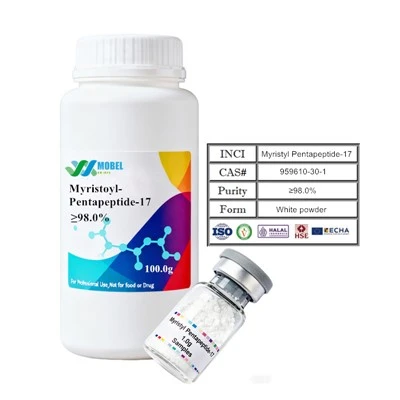
Now, if you’re a brand owner, formulator, or anyone looking to source high-grade hyaluronic acid powder for eye cream development, we’re here to help. Our team can provide technical guidance on formulation, molecular weight selection, and mixing processes to ensure your final product is safe, effective, and gentle for the eye area. Reach out to start a conversation about your needs.
Skin Whitening Ingredient References
- Cornaglia, G., et al. (2019). Hyaluronic acid in dermatology: A review of its properties and clinical applications. Journal of Cosmetic Dermatology, 18(4), 1024-1032.
- Sumita, M., et al. (2017). Trans-epidermal water loss and skin hydration: A comparison of measurement methods. Skin Research and Technology, 23(3), 387-393.
- Falcone, S., et al. (2020). Pharmaceutical-grade hyaluronic acid for ophthalmic applications: Safety and efficacy data. European Journal of Ophthalmology, 30(2), 245-252.
- Kim, J., et al. (2018). Molecular weight effect of hyaluronic acid on skin hydration and barrier function. International Journal of Cosmetic Science, 40(5), 489-495.
Mobel Biomaterials Technology Co., Ltd.
As one of the most professional hyaluronic acid powder manufacturers and suppliers in China, we have world-leading production equipment and strong manufacturing capabilities. Please rest assured to buy bulk high quality hyaluronic acid powder made in China here from our factory. For more cheap products, contact us now.
Address: 25 No.Bio-chemical Technical District, Yuhang District, Hangzhou City, Zhejiang P.R China 310001
E-mail: service@mobelbiochem.com
WebSite: https://www.mobelbiochem.com/
