Hey everyone, if you’ve ever dabbled in manufacturing, construction, or even just building something around the house, chancesize you’ve crossed paths with carbon steel coil. But let’s be real—most folks don’t stop to ask why cold-rolled is the go-to instead of hot-rolled, right? As a carbon steel coil supplier, I get this question all the time, so I figured I’d break it down like I would chatting with a regular customer who’s trying to wrap their head around what makes cold-rolled stuff actually worth the investment. No boring jargon, just the straight-up facts that matter when you’re picking materials for your next project. Carbon Steel Coil
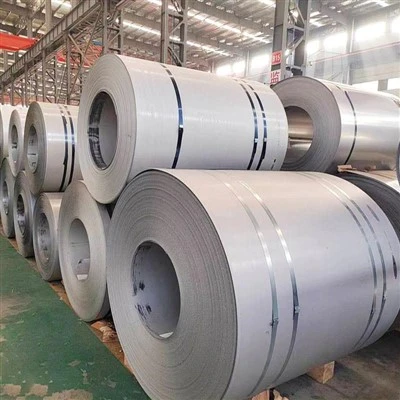
First off, let’s keep it simple: cold-rolled carbon steel coil is basically hot-rolled steel that’s been processed at room temperature, after it’s cooled down from the hot mill. That small difference in how it’s made? It’s a game-changer for so many applications. Let’s start with the biggest win—surface quality. If you’ve ever looked at hot-rolled steel, it’s got that kind of dark, scaly, oxidized surface, right? Like, it works for stuff where looks don’t matter, but if you need something that’s smooth, consistent, and ready to paint or weld without a ton of extra work? Cold-rolled is your guy. I’ve had automotive clients come to me screaming about this—they can’t use that rough hot-rolled stuff for body panels or interior trim, because it shows every little dent or uneven spot. Cold-rolled’s surface is so clean, you don’t have to spend hours grinding off scale or sanding down rough patches before finishing. That cuts down on labor time, which saves them money in the long run. Trust me, when you’re running a production line where every minute of downtime costs you cash, that smoother surface isn’t just nice—it’s a cost saver.
Next up, dimensional accuracy and thickness control. Hot-rolled steel has a habit of warping a little as it cools, right? Like, if you’re trying to get a part that’s exactly 1.2mm thick, hot-rolled might be off by 0.1 or 0.2mm, which is a big deal for precision work. Cold-rolled gets rolled at room temp, so there’s no shrinkage or warping from cooling. We can hold thickness tolerances way tighter—like, within 0.05mm for many grades. That’s huge for things like appliance parts, where a fridge door panel that’s too thick won’t fit right, or a dishwasher rack component that’s too thin will bend after a month. I had a HVAC manufacturer reach out last year because their old supplier’s hot-rolled coils were making ductwork that didn’t line up when installing—they were wasting so much material trimming off the extra or bending gaps to fit. Switched to cold-rolled, and their scrap rate dropped by 18% in the first quarter. That’s not a tiny number, that’s profit they got to keep.
Wait, also—strength and hardness. Cold rolling work hardens the steel, right? That’s not a bad thing, if you use it right. When you roll steel at room temp, you’re deforming the grains inside, which makes it way stronger and harder than hot-rolled of the same grade. So if you need something that can hold up to pressure, won’t bend easily, or has a good level of durability without adding extra thickness? Cold-rolled is perfect. For example, furniture manufacturers—they use cold-rolled for table legs, chair frames, stuff that needs to support weight without being bulky. If you used hot-rolled for that, you’d have to make the legs twice as thick to get the same strength, which adds material cost and makes the furniture heavier. That’s a lose-lose. Work hardening from cold rolling gives you that strength without the extra bulk. But here’s the thing—you don’t have to worry about it being too brittle, either. We can adjust the grade and processing to get the exact balance of hardness and flexibility you need, whether it’s for a sharp tool part or a flexible metal bracket.
Oh, and formability! A lot of people think if steel is harder, it’s less formable, but cold-rolled carbon steel coil actually has way better formability than hot-rolled. Because the surface is smooth and the dimensions are consistent, you can bend, stamp, or shape it into complex parts without it cracking or wrinkling. Think about automotive body panels—they’re stamped into all sorts of curves and angles, right? If the steel was rough or inconsistent, it would tear during stamping. I’ve seen clients use cold-rolled to make everything from custom metal signs to deep-drawn parts for water heaters, and they never have to deal with the kind of wrinkles or cracks that come with hot-rolled. Also, since it’s processed at room temp, you don’t have to heat it up to shape it, which saves energy during your production process. That’s another small win that adds up.
Wait, let’s not forget about finish versatility. Because cold-rolled has that smooth, scale-free surface, it takes coatings way better. Paint, powder coat, galvanizing, even just a clear coat—they stick way more evenly and look way nicer than on hot-rolled steel. Hot-rolled’s scaly surface means coatings don’t adhere as well, so they peel or chip over time. Cold-rolled’s surface is uniform, so the finish looks consistent, no blotches or uneven spots. That’s why appliance brands—like those washing machine or dryer makers that want their products to look sleek and modern—swear by cold-rolled. Customers don’t want a washer that’s got a spotty paint job, so the manufacturers know they need a surface that can hold a smooth, long-lasting finish.
Now, I know what some of you are thinking: “Wait, isn’t cold-rolled more expensive than hot-rolled?” Yeah, upfront it is, a little. But here’s the thing—when you add up all the extra costs you avoid (labor for finishing, scrap material, downtime, rework), it’s actually cheaper in the long run. Let’s go back to that HVAC company I mentioned earlier. They paid 10% more per coil for cold-rolled, but their scrap rate dropped 18%, and they saved 20% on labor because they didn’t have to grind and trim the hot-rolled parts. Net net, they came out ahead. Another example: a small metal fabricator I work with does custom railings for residential homes. They used to use hot-rolled because it was cheaper, but they had to sand every piece to get rid of scale before painting, which took 2 hours per railing. Switched to cold-rolled, sanding time went down to 20 minutes, so they could take on more jobs in the same amount of time, and their customers were happier with the smoother, more consistent finish. That extra capacity meant more money in their pocket.
Also, let’s talk about environmental factors, because that’s something more and more clients are asking about these days. Cold rolling doesn’t require the high heat that hot rolling does, so it uses less energy overall. Less energy means lower carbon emissions, which is a big plus for companies that are trying to lower their environmental footprint. Plus, the scrap rate is lower, so less material goes to waste. That’s a win for your bottom line and for the planet—doesn’t get much better than that.
I want to be real here, though—cold-rolled carbon steel coil isn’t the right choice for every job. If you’re making something structural where strength isn’t super critical, and looks don’t matter, hot-rolled might be fine. But for anything that needs precision, a good finish, or durability, cold-rolled is almost always the better pick. As a supplier, I don’t push my clients to buy something they don’t need, but I do make sure they know the pros and cons so they can make an informed decision.
Let’s wrap this up, because I know I rambled a little (that’s just how I am when I talk about steel, I guess). The main advantages? Smooth, high-quality surface that needs minimal finishing, tight dimensional accuracy that cuts down on scrap, work-hardened strength without extra thickness, great formability for complex parts, and superior coating adhesion for long-lasting finishes. All of that adds up to less labor, less waste, lower long-term costs, and better end products that your customers will be happier with.
If you’re working on a project right now and trying to figure out if cold-rolled carbon steel coil is the right fit, don’t hesitate to reach out. I’ve helped everything from small local fabricators to big national brands pick the right material, and I’d be happy to chat through your specific needs, answer any questions, or send over samples if you want to test it out for yourself. No pressure, just real talk from a guy who’s been in this game for years and knows what works.
Aluminum Sheet/Plate References:
- The World Steel Association. (2022). Steel Products: Cold Rolled Steel. Retrieved from industry standard technical manuals for steel processing and applications
- American Iron and Steel Institute. (2021). Technical Guide to Carbon Steel Coil Products. Retrieved from industry technical resources on material properties and dimensional tolerances
- Manufacturing Engineering Magazine. (2023). Cost-Benefit Analysis of Cold vs. Hot Rolled Steel for Custom Fabrication. Retrieved from industry production cost studies and case studies
Wuxi Jin Ming Jian De Industry & Trade Co., Ltd.
Wuxi Jin Ming Jian De Industry & Trade Co., Ltd. is one of the most professional carbon steel coil manufacturers and suppliers in China, also supports customized service. With abundant experience, we warmly welcome you to wholesale CE approved carbon steel coil in stock here from our factory. If you have any enquiry about quotation, please feel free to email us.
Address: 2102-2105, Yuexing Building, Guangnan Road, Liangxi District, Wuxi City, Jiangsu Province, China.
E-mail: info@wxjmjdss.com
WebSite: https://www.jmjdsteelexp.com/
