Sod staples, often overlooked yet crucial in landscaping and turf – related projects, play a vital role in ensuring the stability and successful establishment of sod. As a professional sod staple supplier, I’ve had the privilege of witnessing firsthand how these simple yet effective tools can make a significant difference in various applications. In this blog, I’ll delve into the science and practical aspects of how sod staples work. Sod Staple

The Basics of Sod Staples
Before we look into how sod staples work, let’s first understand what they are. Sod staples are typically made of galvanized steel wires, ensuring they are durable and resistant to rust. They come in different lengths, usually ranging from 3 – 6 inches, and have a U – shaped design. The shape allows them to be easily inserted into the ground, effectively holding down sod and preventing it from shifting or being displaced.
How Do They Work in Installation?
The process of working with sod staples begins with the installation of the sod itself. When you lay a new patch of sod, it’s essential to ensure that it makes good contact with the soil beneath. This contact is crucial for the roots of the sod to penetrate the soil and establish a strong connection. However, factors such as wind, foot traffic, or water runoff can cause the sod to move, disrupting this root – soil connection.
This is where sod staples come in. To install them, you simply place the sod in the desired location and then position the sod staple over the edge or seam of the sod. Using a mallet or a specialized staple gun, you drive the staple into the ground. The two prongs of the U – shaped staple penetrate the sod and anchor it firmly into the soil. By doing so, they hold the sod in place, even in the face of environmental and human – induced disturbances.
Their Role in Root Development
One of the primary functions of sod staples is to promote healthy root development. When sod is newly laid, its roots need time to grow into the soil. During this period, any movement of the sod can damage or sever the tender roots that are just beginning to form. By keeping the sod firmly in place, sod staples create a stable environment for root growth.
The roots can grow without the risk of being disrupted by external forces. In addition, the consistent contact between the sod and the soil, maintained by the staples, allows for better nutrient and water uptake. The roots can access the moisture and essential minerals in the soil more efficiently, which is crucial for the overall health and vitality of the sod. Over time, as the roots grow and establish a strong network in the soil, the sod becomes more self – sustaining and less reliant on the staples.
Applications in Different Settings
Sod staples are used in a wide variety of settings. In residential landscaping, they are commonly used when homeowners are installing a new lawn or patching up existing areas. Whether it’s a small backyard garden or a large front yard, sod staples help ensure that the newly laid sod takes root properly and looks uniform.
Commercial landscapes also benefit greatly from the use of sod staples. Office complexes, parks, and golf courses all require large areas of high – quality turf. In these settings, sod staples are used to secure sod in place, especially in areas with high foot traffic or exposed to strong winds. For example, on a golf course fairway, sod staples prevent the sod from being displaced by the movement of golf carts and players, maintaining the smoothness and integrity of the playing surface.
In erosion control projects, sod staples are an indispensable tool. When sod is used to cover steep slopes or areas prone to soil erosion, the staples hold the sod securely in place. This helps prevent soil from washing away during heavy rain or other weather events. The established sod then acts as a natural barrier, stabilizing the soil and preventing further erosion.
Factors Affecting the Function of Sod Staples
Several factors can affect how well sod staples work. The soil type is an important consideration. In soft, sandy soils, the staples may penetrate easily but may also be prone to pulling out more quickly. On the other hand, in hard, compacted soils, driving the staples can be more challenging, but once in place, they tend to provide a more secure hold.
The weather conditions at the time of installation also play a role. If the ground is frozen or overly wet, it can be difficult to install the staples properly. In wet conditions, the soil may not grip the staples as well, reducing their effectiveness. Conversely, in dry, hard ground, the staples may not be able to penetrate deeply enough.
The quality of the sod itself can influence the performance of the staples. If the sod is of poor quality, with weak or thin roots, it may not be able to establish a strong connection with the soil even with the use of staples. High – quality sod with a robust root system is more likely to benefit from the stability provided by the staples and grow into a healthy lawn.
Maintenance and Removal of Sod Staples
Once the sod has established its roots, the need for the sod staples gradually decreases. In most cases, after a few weeks to a couple of months, depending on the growth rate of the sod and environmental conditions, the sod can support itself without the help of the staples. At this point, the staples can be removed.
Removal is relatively simple. A pair of pliers can be used to grip the staple and pull it out of the ground. In large – scale projects, specialized tools may be used to speed up the process. If the staples are left in the ground for an extended period, they will eventually rust away, especially if they are made of galvanized steel, which is environmentally friendly. However, it’s often a good practice to remove them to avoid any potential damage to lawn mowers or other equipment in the future.
Why Choose Our Sod Staples?
As a trusted sod staple supplier, we take pride in offering high – quality products. Our sod staples are made from top – grade galvanized steel, ensuring maximum durability and rust resistance. The manufacturing process is strictly controlled to guarantee consistent quality. The sharp tips of our staples make them easy to drive into the ground, even in challenging soil conditions.
We offer a wide range of staple lengths to suit different project requirements. Whether you are working on a small residential lawn or a large commercial landscape, we have the right sod staples for you. Our products are competitively priced without compromising on quality, ensuring that you get the best value for your money.
Contact Us for Your Sod Staple Needs
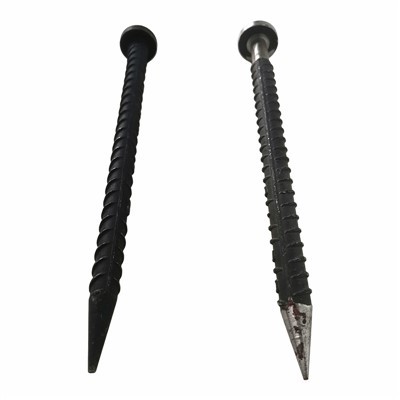
If you are involved in a landscaping project, whether it’s a new lawn installation, an erosion control effort, or a commercial turf project, we are here to provide the best sod staples for your needs. We understand the importance of reliable and effective products in achieving successful results.
Vineyard Post Contact us to discuss your specific requirements, and our experienced team will be happy to assist you. We can offer advice on the appropriate staple length and type based on your soil conditions and project size. Let’s work together to ensure the success of your next landscaping endeavor with our high – quality sod staples.
References
- "Landscaping 101: Sod Installation" by Green Thumb Publishing.
- "Erosion Control Techniques and Tools" published by the Soil Conservation Society.
- "The Science of Turfgrass Establishment" in Journal of Horticultural Science.
Hebei Goldfinch Import And Export Trade Co., Ltd.
As one of the most experienced sod staple manufacturers and suppliers in China, we offer a wide range of products with superior quality. Please feel free to wholesale customized sod staple made in China here from our factory. Contact us for more details.
Address: No. 3 Shanglanting, Tayuanzhuang, Zhengding County, Shijiazhuang City, Hebei Province
E-mail: goldfinchmetal@outlook.com
WebSite: https://www.hbgoldfinchmetal.com/
