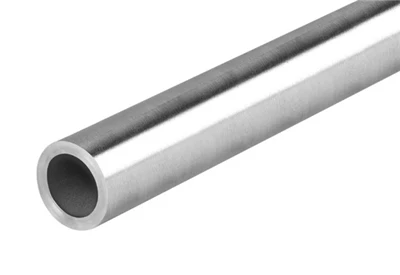
Hey there! As a supplier of carbon steel pipes, I often get asked about the yield strength of these pipes. So, I thought I’d write this blog to break it down for you in a simple way. Carbon Steel Pipe

First off, let’s talk about what yield strength actually is. Yield strength is the stress at which a material begins to deform plastically. In simpler terms, it’s the point where the material stops acting like a spring (returning to its original shape when the stress is removed) and starts to change its shape permanently. For carbon steel pipes, this is a crucial property because it determines how much pressure or load the pipe can handle before it starts to bend or break.
Carbon steel is an alloy of iron and carbon, with small amounts of other elements like manganese, silicon, and sulfur. The amount of carbon in the steel has a big impact on its yield strength. Generally speaking, the more carbon there is in the steel, the higher its yield strength. But it’s not that simple. Other factors, like the manufacturing process, heat treatment, and the presence of other elements, also play a role.
Let’s start with the basics of carbon content. Low – carbon steel, which typically has a carbon content of less than 0.3%, has a relatively low yield strength. It’s around 250 – 300 megapascals (MPa). This type of steel is easy to form and weld, which makes it a popular choice for applications where you need a lot of flexibility in the manufacturing process. For example, it’s often used in construction for things like scaffolding or in automotive manufacturing for parts that need to be bent or shaped easily.
Medium – carbon steel, with a carbon content between 0.3% and 0.6%, has a higher yield strength, usually in the range of 350 – 500 MPa. This type of steel is stronger and more durable than low – carbon steel, but it’s also a bit harder to work with. It’s commonly used in machinery parts, such as gears and shafts, where you need a good balance of strength and toughness.
High – carbon steel, with a carbon content above 0.6%, can have a yield strength of 500 MPa or more. It’s extremely strong and hard, but it’s also very brittle. This means it’s not suitable for applications where it might be subject to sudden impacts or vibrations. High – carbon steel is often used in cutting tools, like knives and saw blades, where its hardness is an advantage.
But as I said earlier, the manufacturing process can also affect the yield strength of carbon steel pipes. For instance, cold – rolling is a process where the steel is rolled at room temperature. This process can increase the yield strength of the steel by aligning the grains in the metal. When the grains are aligned, it’s harder for them to slide past each other, which means the steel can withstand more stress before it starts to deform.
On the other hand, hot – rolling is done at high temperatures. This process can make the steel more ductile, which means it can be bent and shaped more easily. However, the yield strength of hot – rolled steel is generally lower than that of cold – rolled steel.
Heat treatment is another important factor. Annealing is a heat – treatment process where the steel is heated to a high temperature and then slowly cooled. This process can relieve internal stresses in the steel and make it more ductile. But it usually lowers the yield strength.
Quenching and tempering, on the other hand, can increase the yield strength. Quenching involves heating the steel to a high temperature and then rapidly cooling it in water or oil. This creates a very hard and strong structure. Tempering is then done to reduce the brittleness that’s caused by quenching.
Now, let’s talk about why the yield strength of carbon steel pipes matters in real – world applications. In the oil and gas industry, for example, carbon steel pipes are used to transport oil and gas over long distances. These pipes need to be able to withstand high pressures without deforming. If the yield strength of the pipes is too low, they could burst under the pressure, which would be a huge safety hazard and cause a lot of environmental damage.
In the construction industry, carbon steel pipes are used in building structures. They need to support the weight of the building and any additional loads, like snow or wind. If the yield strength of the pipes is not high enough, the structure could collapse, putting people’s lives at risk.
As a carbon steel pipe supplier, I understand the importance of providing pipes with the right yield strength for different applications. That’s why we offer a wide range of carbon steel pipes with different carbon contents and manufacturing processes. Whether you need low – carbon steel pipes for easy forming or high – carbon steel pipes for high – strength applications, we’ve got you covered.
We also work closely with our customers to understand their specific needs. If you’re not sure what yield strength you need for your project, our team of experts can help you figure it out. We’ll take into account factors like the pressure, temperature, and load conditions of your application to recommend the best type of carbon steel pipe for you.
If you’re in the market for carbon steel pipes, I encourage you to get in touch with us. We’re here to provide you with the best quality pipes at competitive prices. Whether you’re a small contractor or a large industrial company, we can work with you to meet your requirements. Just reach out to us, and we’ll start the conversation about your project.
In conclusion, the yield strength of carbon steel pipes is a complex but important property. It’s affected by factors like carbon content, manufacturing process, and heat treatment. Understanding these factors can help you choose the right carbon steel pipes for your application. And as your carbon steel pipe supplier, we’re here to make that process as easy as possible for you.
Carbon Steel Pipe References:
- "The Properties of Steel" by George E. Dieter
- "Materials Science and Engineering: An Introduction" by William D. Callister Jr. and David G. Rethwisch
Shandong Henry Group Co., Ltd.
As one of the most professional carbon steel pipe manufacturers and suppliers in China since 1995, we’re featured by quality products and good price. Please rest assured to buy premium carbon steel pipe for sale here from our factory. Contact us for more details.
Address: No. 2688 Meili Road, Meilihu Office, Huaiyin District, Jinan City
E-mail: sales01@henry-china.com
WebSite: https://www.henry-steelpipe.com/
