Hey there! As a diode supplier, I often get asked about different aspects of diodes. One question that pops up quite a lot is, "What is the reverse bias of a diode?" Well, let’s dive right into it and break it down in plain English. DIODE
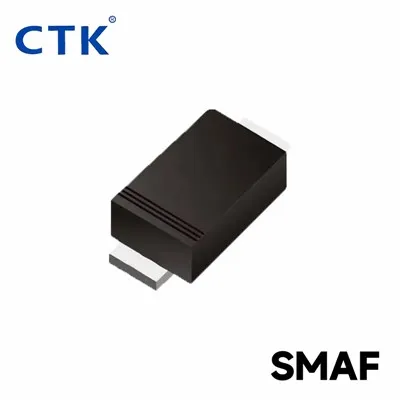
First off, let’s get a basic understanding of what a diode is. A diode is a two – terminal electronic component that allows current to flow in one direction but not the other. It’s like a one – way street for electricity. The two terminals are called the anode and the cathode. When the anode is at a higher voltage than the cathode, we say the diode is forward – biased. In this state, the diode conducts current easily, and it’s like the traffic light is green for the electrons.
Now, let’s talk about reverse bias. When the cathode is at a higher voltage than the anode, the diode is in reverse – bias. Picture it as trying to make traffic go the wrong way on that one – way street. In an ideal world, no current would flow through the diode when it’s reverse – biased. But in the real world, things are a bit more complicated.
There is a small amount of current that flows in reverse – bias, and it’s called the reverse saturation current. This current is typically very small, in the order of microamperes or even nanoamperes. It’s caused by the minority carriers in the semiconductor material of the diode. You see, in a semiconductor, there are two types of carriers: majority carriers and minority carriers. In an N – type semiconductor, electrons are the majority carriers, and holes are the minority carriers. In a P – type semiconductor, holes are the majority carriers, and electrons are the minority carriers.
When the diode is reverse – biased, the electric field across the depletion region (a region near the junction of the P and N materials with very few carriers) pushes the minority carriers across the junction, creating that small reverse current. As the reverse voltage increases, the reverse current remains relatively constant until it reaches a certain point called the breakdown voltage.
The breakdown voltage is a critical parameter. When the reverse voltage applied to the diode reaches this value, the diode experiences a sudden increase in reverse current. There are two main types of breakdown: Zener breakdown and avalanche breakdown.
Zener breakdown occurs in diodes with heavily doped P and N regions. At the breakdown voltage, the strong electric field in the depletion region is able to break the covalent bonds in the semiconductor material, releasing a large number of electrons and holes. This results in a large reverse current. Zener diodes are specifically designed to operate in the Zener breakdown region and are used for voltage regulation.
Avalanche breakdown, on the other hand, happens in diodes with lightly doped P and N regions. As the reverse voltage increases, the minority carriers gain enough energy to collide with the atoms in the semiconductor material, knocking off more electrons and creating an "avalanche" of carriers. This also leads to a large increase in reverse current.
So, why is understanding reverse bias important? Well, for one, it helps in circuit design. If you’re designing a circuit where you need to protect against reverse current, knowing how a diode behaves in reverse bias is crucial. For example, in power supply circuits, diodes are often used to prevent reverse current from flowing back into the power source, which could damage the source or other components in the circuit.
Also, if you’re using Zener diodes for voltage regulation, you need to understand the reverse – bias characteristics. You want to make sure that the Zener diode operates within its specified breakdown voltage range to provide a stable output voltage.
As a diode supplier, I’ve seen firsthand how different applications require different types of diodes with specific reverse – bias characteristics. For high – voltage applications, you might need diodes with a high breakdown voltage. For low – power applications, diodes with a low reverse saturation current are more suitable.
We offer a wide range of diodes, each with its own set of specifications for reverse bias. Whether you’re working on a small DIY project or a large – scale industrial application, we’ve got the right diode for you. Our diodes are made with high – quality materials and undergo strict quality control to ensure reliable performance.
If you’re in the market for diodes and want to learn more about how they perform in reverse bias or which diode is best for your application, don’t hesitate to reach out. We’re here to help you make the right choice. Our team of experts can answer all your questions and guide you through the selection process.
In conclusion, reverse bias is an important concept when it comes to diodes. It affects how diodes behave in circuits and can have a significant impact on the performance and reliability of your electronic devices. By understanding reverse bias, you can make better decisions when it comes to choosing the right diodes for your projects.
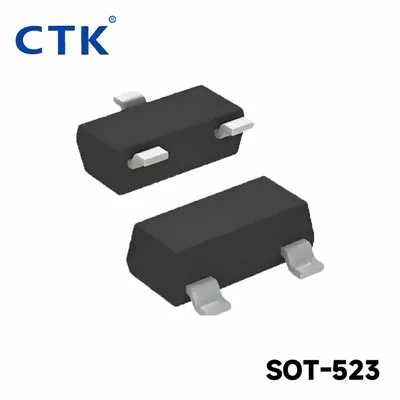
So, if you’re looking for a reliable diode supplier, give us a shout. We’re ready to work with you to meet your diode needs.
Fast Recovery Diode References:
- "Microelectronic Circuits" by Adel S. Sedra and Kenneth C. Smith
- "Electronic Devices and Circuit Theory" by Robert L. Boylestad and Louis Nashelsky
Tongke Electronic Co., Ltd
Tongke Electronic Co., Ltd. is one of the most experienced diode manufacturers and suppliers in China, featured by quality products and low price. Please rest assured to wholesale advanced diode made in China here from our factory. Contact us for pricelist.
Address: No.3,Chayuan Rd, Street 3, AilingKan, Dalingshan, Dongguan, Guangdong, China.
E-mail: jack@ctk-elec.com
WebSite: https://www.ctkchip.com/
