Pad printing, a versatile and widely used printing method, has found its place in various industries, from promotional product manufacturing to the automotive and electronics sectors. As a dedicated pad printer supplier, I have witnessed firsthand the diversity of pad printers available in the market. In this blog, I’ll explore the different types of pad printers, their features, and the ideal applications for each, providing you with a comprehensive understanding to make an informed decision for your printing needs. Pad Printer
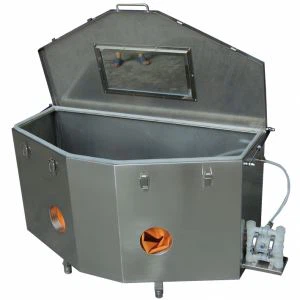
Manual Pad Printers
Manual pad printers are the most basic type of pad printers. They are characterized by their simplicity and affordability, making them an excellent choice for small – scale operations, startups, or those with limited printing needs.
The operation of a manual pad printer is straightforward. The operator loads the ink onto the cliche (the printing plate), positions the pad over the cliche to pick up the ink, and then manually moves the pad to the substrate to transfer the ink. This hands – on approach allows for a great deal of control, especially when dealing with irregularly shaped or delicate items.
One of the key advantages of manual pad printers is their low cost. They require minimal investment in terms of equipment and do not consume a significant amount of energy. Additionally, they are easy to set up and maintain, with fewer mechanical parts that could potentially break down.
However, manual pad printers also have their limitations. They are relatively slow compared to automatic models, as the printing process is entirely dependent on the operator’s speed and skill. This makes them less suitable for high – volume production. Moreover, the consistency of the prints may vary slightly from one print to another, as the operator’s technique can influence the quality of the transfer.
Manual pad printers are commonly used in small workshops for printing on items such as small promotional items (keychains, bottle openers), jewelry, and hand – crafted products. Their ability to print on a variety of shapes and materials, combined with their low cost, makes them a popular choice for these types of applications.
Semi – Automatic Pad Printers
Semi – automatic pad printers offer a step up in terms of efficiency and productivity compared to manual models. These printers combine some automated processes with manual intervention.
In a semi – automatic pad printer, the ink loading onto the cliche and the ink transfer from the pad to the substrate are often automated, while the operator is still responsible for placing the substrate in the correct position before each print. This reduces the time and effort required for each print cycle, increasing the overall throughput.
The semi – automatic nature of these printers also results in more consistent prints. Since the automated components control the ink distribution and transfer, the quality of each print is more uniform compared to manual printers. They are also capable of handling a wider range of printing speeds and can be adjusted to meet different production requirements.
However, semi – automatic pad printers are more expensive than manual ones. They require a certain level of technical knowledge to operate and maintain, as they have more complex mechanical and electrical systems. Additionally, they may not be as flexible as manual printers when it comes to printing on highly irregular or uniquely shaped items, as the substrate placement needs to be relatively precise for the automated processes to work effectively.
Semi – automatic pad printers are well – suited for medium – volume production. They are commonly used in industries such as the manufacturing of consumer goods, where a moderate number of items need to be printed with consistent quality, for example, printing logos on plastic toys or labels on electronic devices.
Automatic Pad Printers
Automatic pad printers are the most advanced and efficient type of pad printers, designed for high – volume production environments. These printers are fully automated, from substrate feeding to ink loading, pad movement, and ink transfer, requiring minimal operator intervention.
One of the main advantages of automatic pad printers is their high speed. They can print a large number of items in a short period, significantly increasing production efficiency. The consistency of the prints is also extremely high, as the entire process is controlled by sophisticated software and mechanical systems. This makes them ideal for applications where large quantities of identical prints are required.
Automatic pad printers are also very versatile in terms of the substrates they can handle. They can be equipped with different types of feeding systems, such as conveyor belts or robotic arms, to accommodate a wide range of products, including round, flat, and irregularly shaped items. They can also be integrated into existing production lines, allowing for seamless workflow integration.
However, automatic pad printers come with a high price tag. The initial investment in equipment, as well as the cost of installation, programming, and maintenance, is substantial. They also require a high level of technical expertise to operate and troubleshoot. Any breakdown or malfunction can cause significant disruptions to the production process.
Automatic pad printers are commonly used in large – scale manufacturing industries, such as the automotive and electronics industries. In the automotive industry, they are used for printing on dashboard components, buttons, and other parts. In the electronics industry, they are used for printing on circuit boards, mobile phone casings, and other electronic devices.
Multi – Color Pad Printers
In addition to the classification based on automation levels, pad printers can also be categorized by the number of colors they can print. Multi – color pad printers allow for the printing of complex, multi – colored designs in a single printing cycle.
These printers use multiple clichés and pads, each dedicated to a different color. The pads pick up the respective colors from their cliches and then transfer them onto the substrate in a precise sequence. This process requires careful registration to ensure that the colors are aligned correctly and that the final print looks sharp and vibrant.
Multi – color pad printers can be either manual, semi – automatic, or automatic, depending on the level of automation required for the production process. They offer a significant advantage in terms of time and cost savings compared to printing each color separately. By printing multiple colors at once, the production time is reduced, and the risk of misalignment between colors is minimized.
However, multi – color pad printers are more complex and expensive than single – color printers. They require more advanced programming and setup to ensure accurate color registration. The maintenance of these printers is also more challenging, as there are more components involved.
Multi – color pad printers are commonly used in industries where high – quality, multi – colored prints are required, such as the printing of promotional materials, packaging, and high – end consumer products.
Specialized Pad Printers
There are also specialized pad printers designed for specific applications. For example, there are pad printers optimized for printing on cylindrical objects, such as bottles or tubes. These printers use a rotating mechanism to ensure that the print is evenly applied around the circumference of the object.
Another type of specialized pad printer is designed for printing on very small or micro – sized components. These printers are equipped with high – precision pads and clichés, as well as advanced vision systems to ensure accurate placement of the print on the tiny substrate.
Specialized pad printers are engineered to meet the unique requirements of specific industries or applications. They often incorporate specialized features and technologies to achieve the desired printing results. However, they can be very expensive and may have limited usability outside of their intended applications.
Choosing the Right Pad Printer
When selecting a pad printer, there are several factors to consider. Firstly, the volume of production is a crucial factor. If you have a small – scale operation or a low – volume production requirement, a manual or semi – automatic pad printer may be sufficient. On the other hand, if you need to produce a large number of items, an automatic pad printer is a better choice.
Secondly, the type and complexity of the prints also play a role. If you require multi – colored prints, a multi – color pad printer is necessary. For printing on irregular or specialized substrates, you may need to consider a specialized pad printer.
Cost is another important consideration. You need to balance the initial investment in the equipment with the long – term benefits and savings. Additionally, the maintenance and operating costs of the printer, including the cost of ink, clichés, and pads, should be taken into account.
Finally, the level of technical expertise available in your organization is also a factor. Manual printers are easier to operate and maintain, while automatic and specialized printers require a higher level of technical knowledge.

As a pad printer supplier, I am committed to helping you find the right pad printer for your specific needs. Whether you are a small business looking for an affordable and easy – to – use solution or a large – scale manufacturer in need of high – speed and high – precision equipment, I can provide you with the professional advice and support you need.
Uv Painting Line If you are interested in learning more about our pad printers or discussing your specific printing requirements, please feel free to reach out to us for a detailed consultation. Our team of experts is ready to help you make the best decision for your business.
References
- "Pad Printing Handbook" by various industry experts, a comprehensive guide on pad printing technology.
- Industry whitepapers on the development and application of different types of pad printers.
- Technical brochures from leading pad printer manufacturers.
Shenzhen Hejia Automatic Printing Machine Co., Ltd.
Shenzhen Hejia Automatic Printing Machine Co., Ltd. is one of the most professional pad printer manufacturers and suppliers in China. All products for sale come in high precision and reliable performance. If you’re interested in it, welcome to place orders for pad printer from our factory. Good prices and services are offered in our factory.
Address: No.3 Building, Daerxun Technology Ind. Zone, No.29 Pingxin North Road, Pinghu Town, Longgang, Shenzhen City, China
E-mail: info@apm-print.com
WebSite: https://www.apm-print.com/
